Gary Samuelson — AI & Architecture Research
I'm an enterprise architect and AI researcher focused on the full lifecycle of intelligent systems — how they're designed, built, operated, and eventually replaced. Architecture and operations are two views of the same system.
My core conviction: agent architecture IS process architecture. The disciplines that make business processes reliable — value-stream thinking, conformance, auditable lineage — apply directly to agentic AI. The thesis I keep developing: domain semantics should drive orchestration, and orchestration, run well, refines those semantics in return. The runtime isn't where you put your intelligence; it's the deterministic spine that makes intelligence safe to deploy.
The test I keep applying to any design: does it produce decisions you can still defend when the regulation changes two years from now? That question is what separates ecosystem thinking from architecture thinking. The organizations that handle it well aren't the ones with the best initial designs — they're the ones that encoded domain knowledge in a form the next team can read, reason over, and hand off.
I've built production AI systems in emergency medicine, real-time ML platforms at ad-tech scale, and enterprise modernization programs in global banking. When I'm not drawing BPMN diagrams or arguing about ontologies, I'm reading philosophy — the systems-thinking kind, where questions about structure and accountability trace back further than anyone in tech wants to admit.
Latest: The Provenance Divide
Data platforms have standing lineage of records — Databricks' Unity Catalog closed that gap years ago. Nobody has standing lineage of work: who committed the business to what, on what evidence, under which policy version, as a governed, continuous artifact. This paper names that gap the Provenance Divide, grounds it in a realistic, composite insurance-claims scenario, and argues what closing it requires: not a faster discovery sprint, but a standing, continuously reconciled specification.
Previously: Domain Objects Before Process Models
A process model tells you how work moves. It cannot tell you what the work is about. This paper places the data-centric view inside a holistic BPM methodology, separates the authoritative domain object from the Work Record, and shows why AI-assisted discovery — the ProcessOS form of AI — is the necessary ingredient going forward: it finds and segments the domain objects that agentic execution depends on.
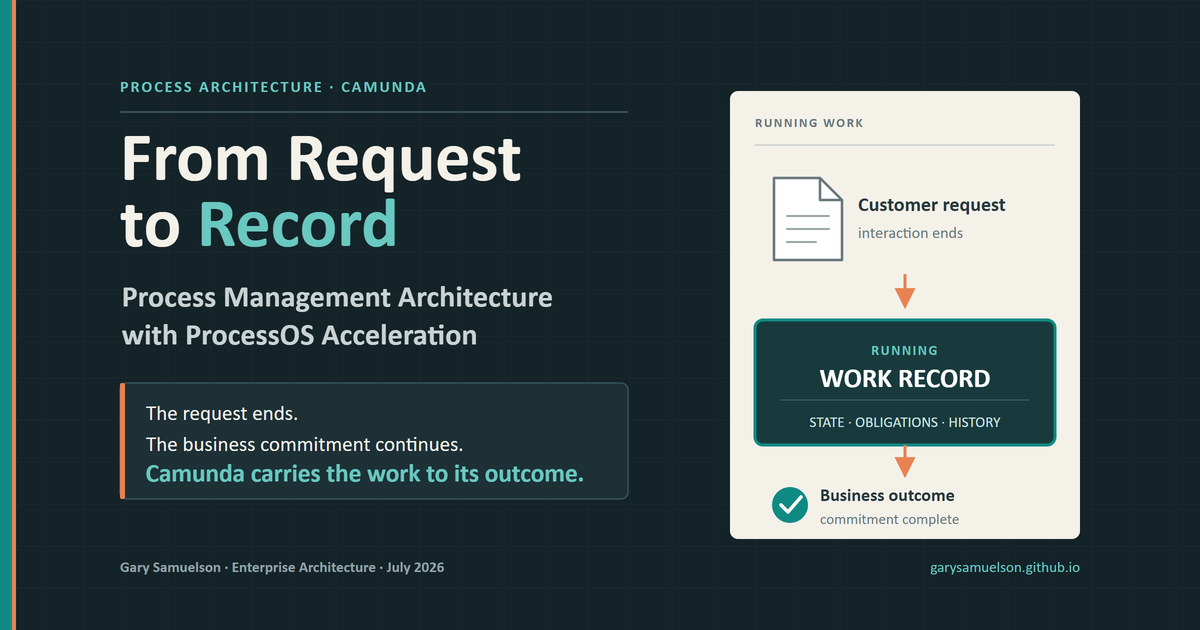
Previously: From Request to Record — Process Management Architecture with ProcessOS Acceleration
The application request ends. The business commitment does not. This paper traces the Camunda architecture that carries work beyond the original interaction and shows how ProcessOS accelerates promotion from application-embedded coordination to an explicit Process Application.
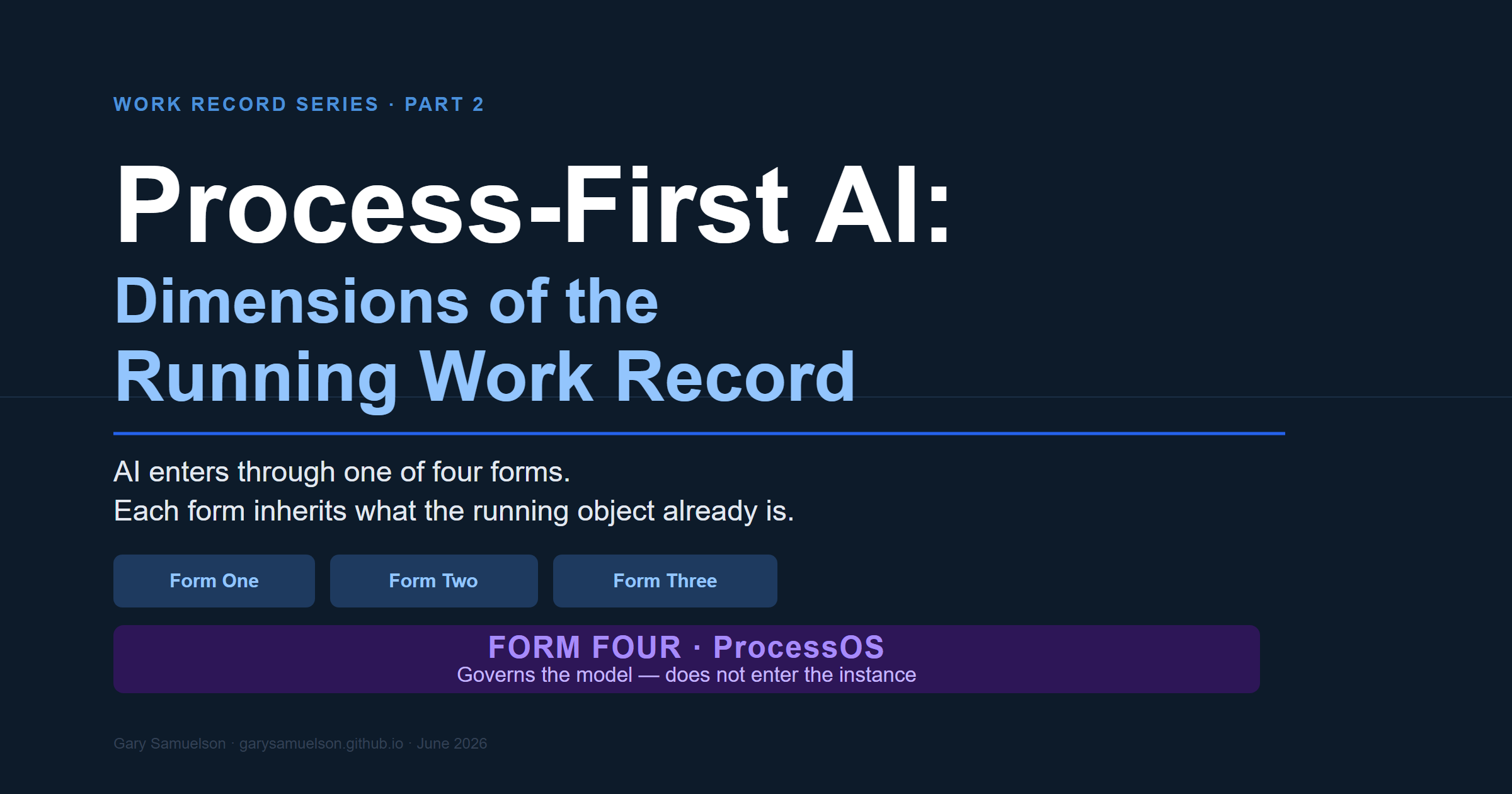
Previously: Process‑First AI — Dimensions of the Running Work Record
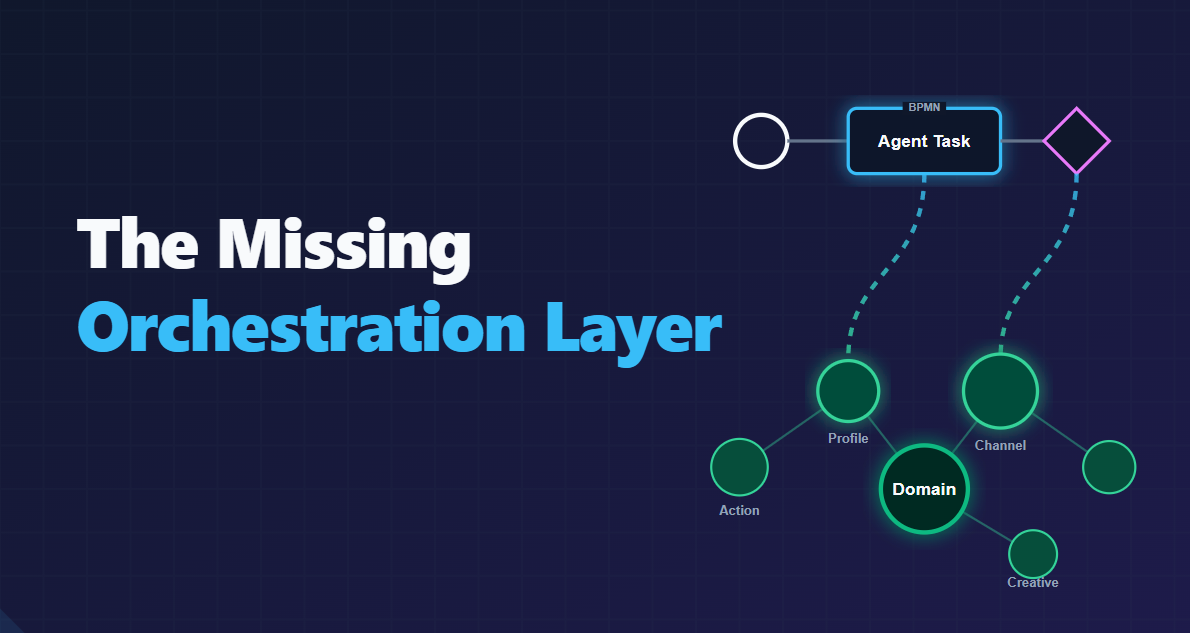
Four forms. Three dimensions. AI enters the Work Record through a task — User Task, Service Task, Ad-Hoc Subprocess, or Process Model Governance. What it gains by entering is the same across all three instance-level forms: computational presence, organizational gravity, and temporal persistence.
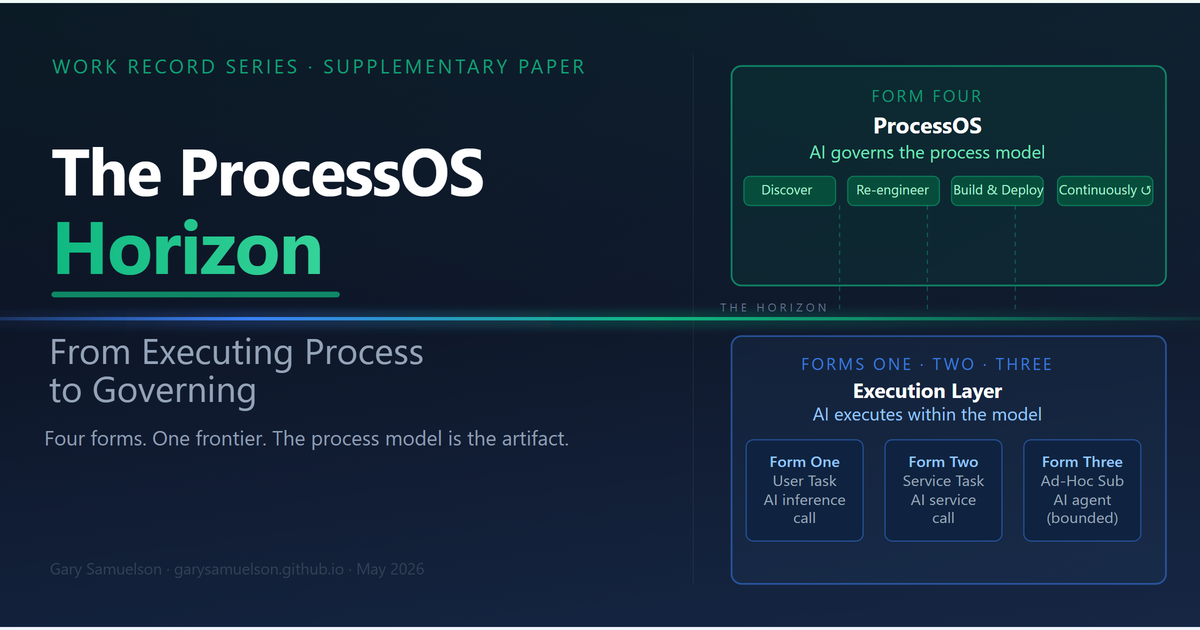
Previously: The ProcessOS Horizon — When AI Stops Running Processes and Starts Redesigning Them
On May 19, 2026, Camunda announced ProcessOS. The three-forms framework describes how AI executes within process instances. ProcessOS doesn't fit any of those forms — it operates on process models as the artifact it manages. Call it Form Four.
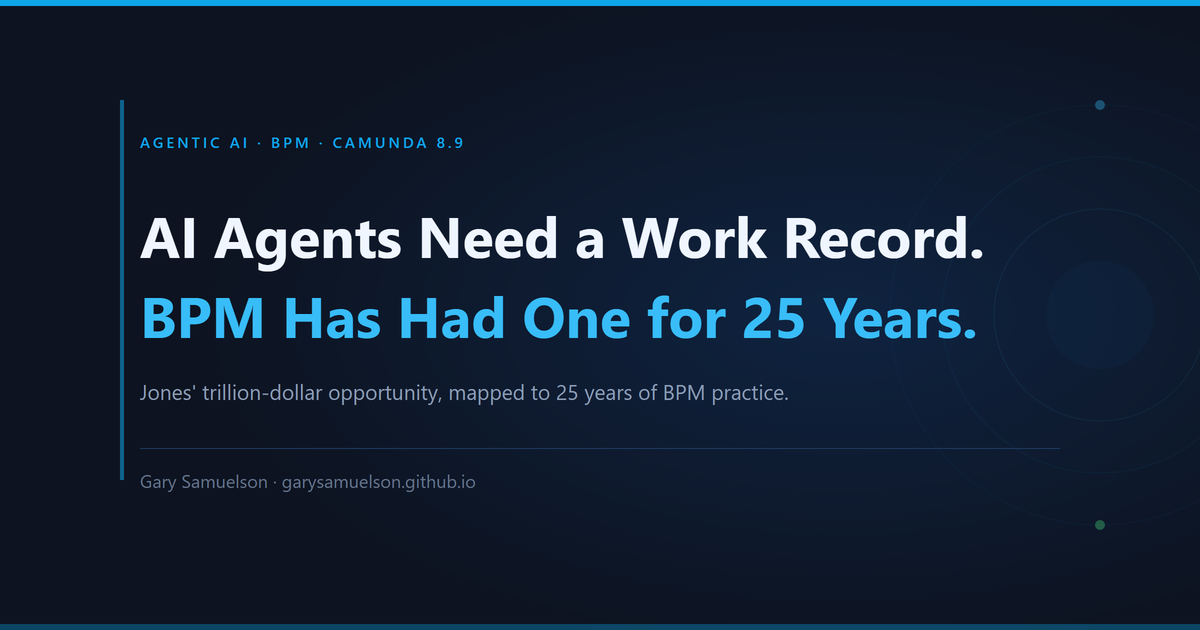
Previously: AI Agents Need a Work Record. BPM Has Had One for 25 Years.
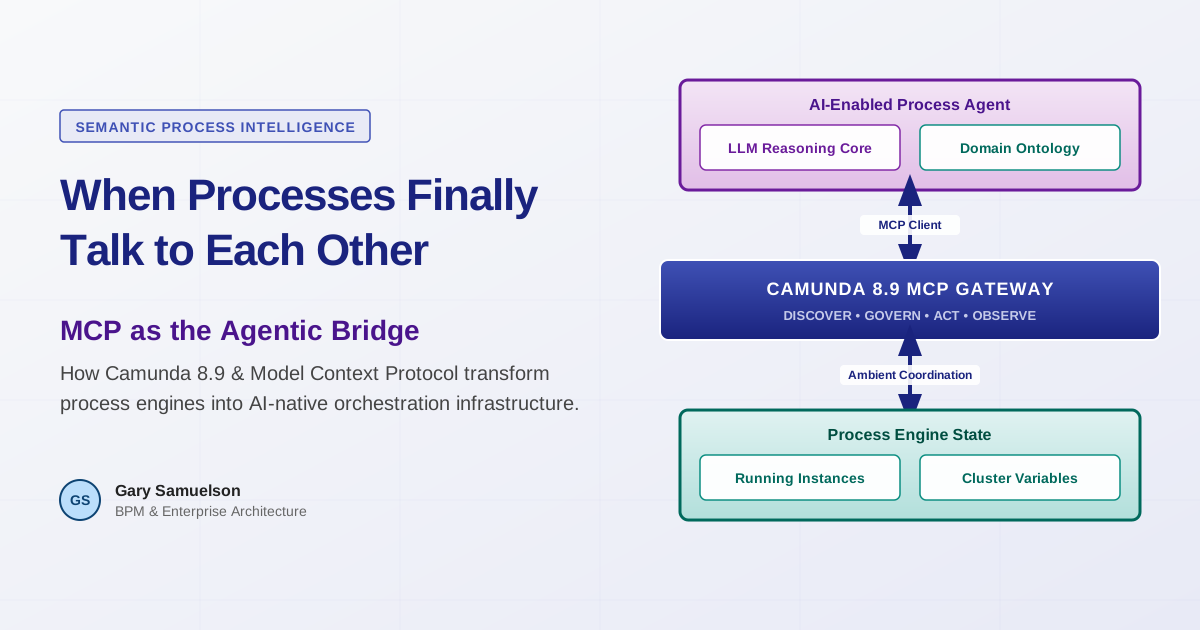
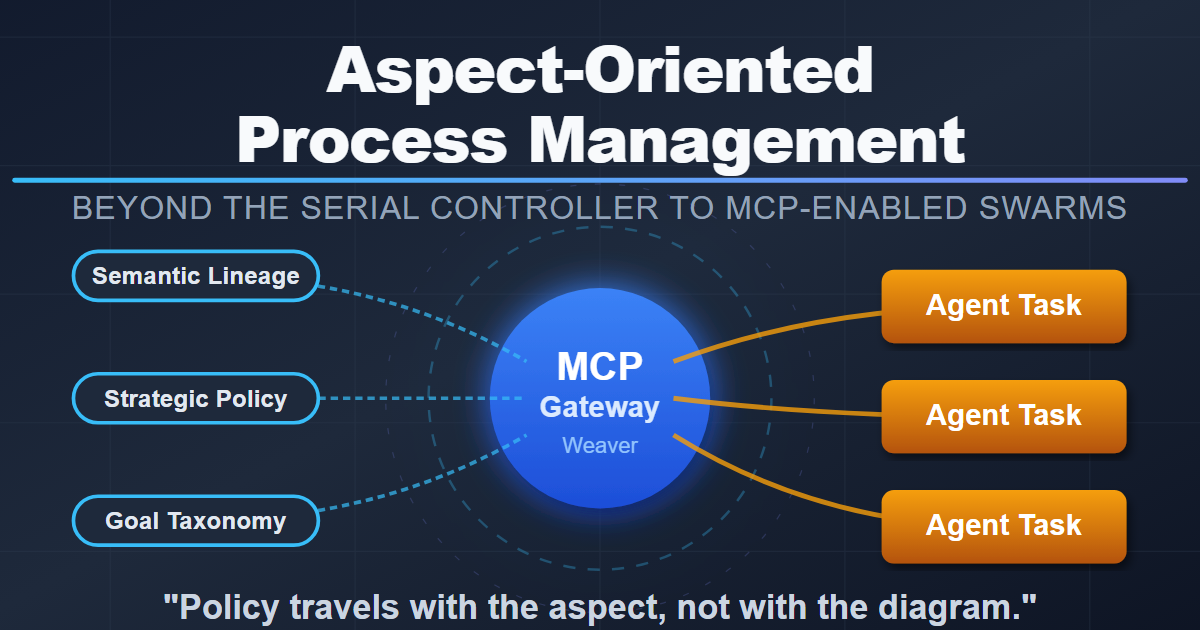
Jones named the gap: agents float above the work, unbound from it, producing output that nobody owns. BPM named the anchor 25 years ago. Six AI platforms surveyed — every one solves coordination. None solve the work object problem. Camunda 8.9's MCP Gateway does — today, in production.
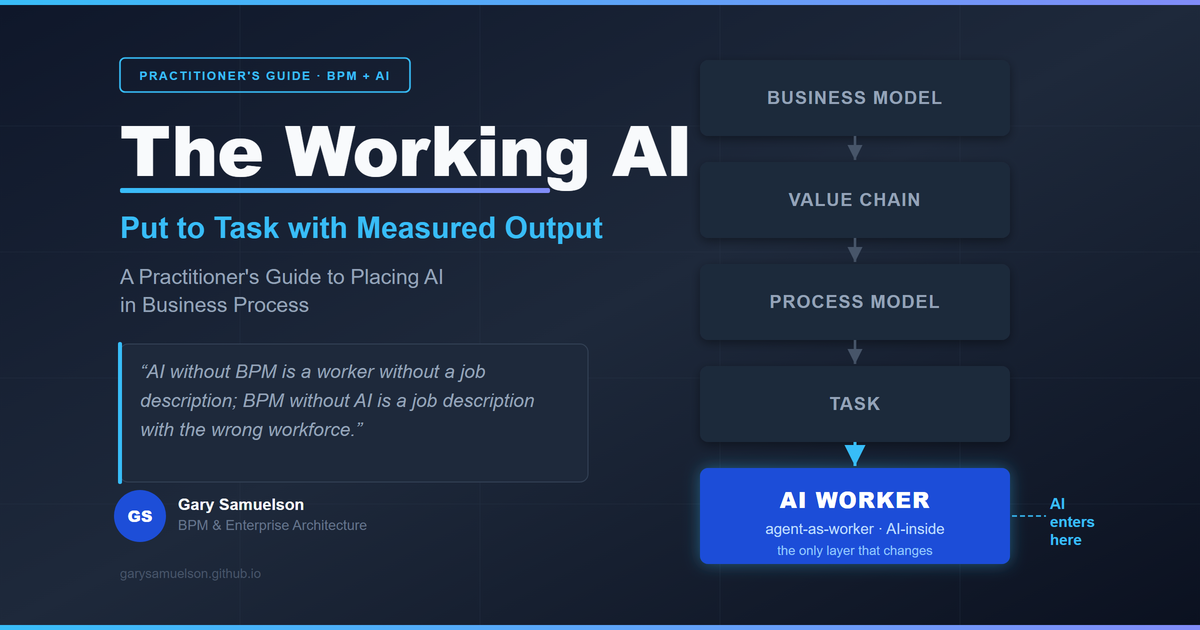
Previously: The Working AI — Put to Task with Measured Output
Most enterprises talk about AI as if it were a strategy. It is not. AI is a class of worker — and like any worker, it needs a job description, a place in the workflow, and a clear measure of what good output looks like. BPM already wrote that job description. This paper maps exactly where AI plugs in.
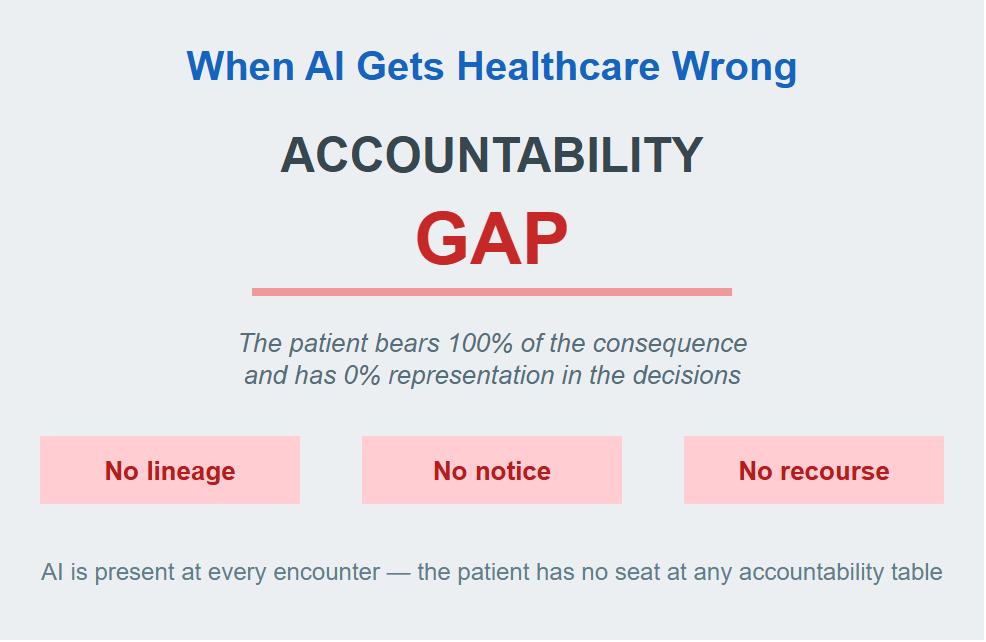
Series: AI Governance in Healthcare
A two-part examination of autonomous AI in healthcare — from the patient experience to the architectural gap beneath it.
Also on This Site
Topics
| Area | Description |
|---|---|
| Semantic AI | LLMs + Knowledge Graphs + ontologies |
| Agentic Systems | Multi-agent orchestration, autonomous workflows |
| BPMN + AI | Intelligent process automation with Zeebe and Camunda |
| Healthcare AI | Governance, accountability, patient safety |
| Enterprise Architecture | Modernization, cloud-native patterns |
Research notes and papers are sourced from ongoing work in enterprise AI transformation.